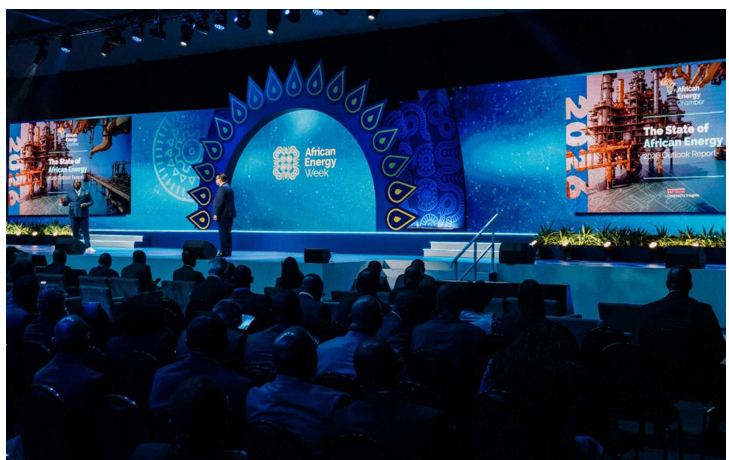


| PRESS RELEASE CAPE TOWN, South Africa, October 31, 2025/ — Africa’s upstream oil and gas sector is entering a period of cautious resurgence, driven by a combination of renewed investment in mature producing nations and the emergence of new exploration hotspots, according to the African Energy Chamber’s (AEC) (https://EnergyChamber.org/) State of African Energy 2026 Outlook (https://apo-opa.co/4ns4xcd). The report, which was launched earlier this month at African Energy Week 2025 in Cape Town, underscores both the opportunities and challenges shaping the continent’s energy future. Established producers, including Algeria, Nigeria, Libya, Egypt and Angola, continue to dominate Africa’s output, yet face mounting pressures from aging infrastructure and maturing fields. In contrast, emerging investment destinations such as Ivory Coast and Namibia are attracting attention thanks to recent discoveries and the potential for high upside, particularly in frontier basins offering favorable fiscal terms. Advancements in seismic acquisition, processing technologies and deepwater drilling capabilities have bolstered exploration efforts, allowing operators to target increasingly complex reservoirs. In North Africa, exploration beneath Upper Miocene evaporites in the Mediterranean basin has unlocked over 50 TCF of gas, while fields such as Zohr in Egyptian waters highlight the challenges of variable reef structures. Along the Atlantic margin, discoveries like Angola’s Agogo field in the Congo Fan illustrate the potential of pre-salt reservoirs, with similar prospects anticipated along the Gabon Coastal Basin and Kwanza Basin in Angola. Onshore frontier areas such as Namibia’s Owambo Basin and Zimbabwe’s Rufunsa Basin have yet to deliver significant discoveries, reinforcing the trend that meaningful finds are increasingly tied to infrastructure-led exploration in more mature areas. “The African upstream sector is evolving rapidly,” says NJ Ayuk, Executive Chairman of the AEC. “Frontier and emerging basins present enormous potential, but realizing that potential requires targeted investment, innovative fiscal frameworks and partnerships that can de-risk technically complex projects. African Energy Week 2026 will be a key forum for shaping how the continent can sustainably unlock these resources.” Africa’s overall hydrocarbon production is expected to remain stable at approximately 11.4 million barrels of oil equivalent per day (MMboe/d) in 2026, with new projects projected to raise output to roughly 13.6 MMboe/d by 2030. North Africa is anticipated to contribute around 60% of this volume, with sub-Saharan Africa supplying the remainder. While offshore deepwater developments are gaining ground, onshore production continues to play a critical role, particularly in Algeria and Libya. Liquids will account for an estimated 63% of 2026 output, while natural gas represents 37%, with gas growth driven by rising global demand and new LNG infrastructure in countries including Mozambique, Nigeria and Senegal. Certain fields, however, face potential risks of asset stranding due to technical and geological challenges. In Egypt, the Hoda, Notus and Satis discoveries collectively hold over 520 million barrels of recoverable reserves, while Sierra Leone’s Jupiter and Angola’s Catchimanha discoveries represent significant Atlantic margin assets. Across Southern Africa, fields such as Brulpadda, Luiperd and Venus face commercial constraints due to restrictive fiscal terms and industrialization challenges, highlighting the critical role of regulatory and contractual frameworks in unlocking Africa’s resource potential. A growing feature of the African energy landscape is the increasing role of National Oil Companies (NOCs), which now account for roughly 53% of total production. By contrast, International Oil Companies contribute about 30%, reflecting a shift toward resource nationalism and greater operational involvement by host governments. Countries such as Nigeria are actively expanding NOC capabilities to operate major assets independently or through joint ventures, emphasizing the need to build local expertise alongside attracting foreign investment. Meanwhile, the African rig market is experiencing nuanced shifts. The floater sector is in gradual decline, while the jackup segment is expected to remain relatively flat over the next three years. Drillship demand may improve from early 2027, but contractors face a more competitive environment, with reduced day rates and excess capacity pressuring margins. In West Africa, high-spec ultra-deepwater fixtures could see rates fall to the low $400,000s, offering opportunities for operators to advance drilling campaigns at more attractive costs. Looking ahead, the next edition of African Energy Week, scheduled for October 12-16, 2026 in Cape Town, will provide a premier platform for discussing these trends in depth, bringing together investors, operators and policymakers. The forum will explore exploration breakthroughs, development challenges and the crucial balance between investment attractiveness and technical complexity. As Africa advances through the next phase of its energy transition, the AEC Outlook highlights the importance of strategic partnerships, innovative fiscal frameworks and capacity-building initiatives to fully unlock the continent’s upstream potential. Distributed by APO Group on behalf of African Energy Chamber. SOURCE African Energy Chamber |
Africa’s Upstream Sector Eyes Cautious Resurgence in 2026, According to African Energy Chamber Report
Discover the cautious resurgence of Africa’s upstream oil and gas sector, with new exploration hotspots in Ivory Coast and Namibia, and established producers like Nigeria and Angola, as outlined in the African Energy Chamber’s 2026 Outlook, highlighting opportunities and challenges for sustainable energy growth.