


%20no-repeat%20center%20center;-webkit-background-size:cover;-moz-background-size:cover;-o-background-size:cover;background-size:%20cover;)
By Sajjad Ashraf
Talks between Afghanistan and Pakistan collapsed in early November 2025 after three rounds mediated by Qatar and Turkiye. The breakdown comes amid intensifying border clashes and diplomatic friction. Without credible cooperation on security, Afghanistan and Pakistan are likely to enter a prolonged cycle of confrontation.
Afghanistan–Pakistan relations had deteriorated following military conflict over Islamabad’s long-standing concern about terror attacks originating in Afghanistan. The fighting included ground clashes, artillery exchanges and claims of cross-border strikes that rattled both capitals, halting trade and movement across major border posts.
This latest rupture stems from long-standing strategic mistrust, fractured domestic politics and the re-emergence of armed networks that exploit the countries’ porous borders. Islamabad accuses Kabul of providing sanctuary to the Tehreek-e-Taliban Pakistan (TTP) and other groups, including the Balochistan Liberation Army — allegations Kabul denies.
The Durand Line — the colonial-era border drawn in 1893 — has been a perpetual fault line. It bisects Pashtun tribal areas and has never been accepted by any Afghan government. Pakistan has long feared that a hostile Kabul will allow sanctuaries for anti-Pakistan militants, while Afghanistan has complained of incursions and heavy-handed Pakistani policies in Pashtun borderlands. After each regime change in Afghanistan, a brief phase of diplomatic warmth between Islamabad and Kabul has given way to mutual recriminations as old grievances reassert themselves.
This pattern reflects a mix of external incentives and domestic constraints. Every new Afghan administration looks outward for international legitimacy and immediate relief. But domestic pressures quickly complicate matters as militant groups with local roots pursue their own political agendas.
Provincial politics in Pakistan — especially in Khyber Pakhtunkhwa and Balochistan — also generate grievances that cross-border insurgents can exploit. This is compounded by security establishments in both countries interpreting diplomatic outreach through different strategic lenses, limiting the possibility of cooperation. A new Afghan regime may start by offering assurances. But when faced with TTP pressure, internal dissent or overtures from rival capitals like New Delhi, Kabul’s policies — real or perceived — often shift and mutual trust collapses again.
The Indian rapprochement with Afghanistan starting in October 2025 has coincided with a downturn in relations between Afghanistan and Pakistan. Islamabad argues the TTP — an ideological cousin of the Afghan Taliban that aims to topple or coerce the Pakistani state — is directing a wave of lethal attacks inside Pakistan. The Pakistani military responded with strikes and retaliatory operations after what it described as repeated cross-border attacks and sanctuary for TTP operatives.
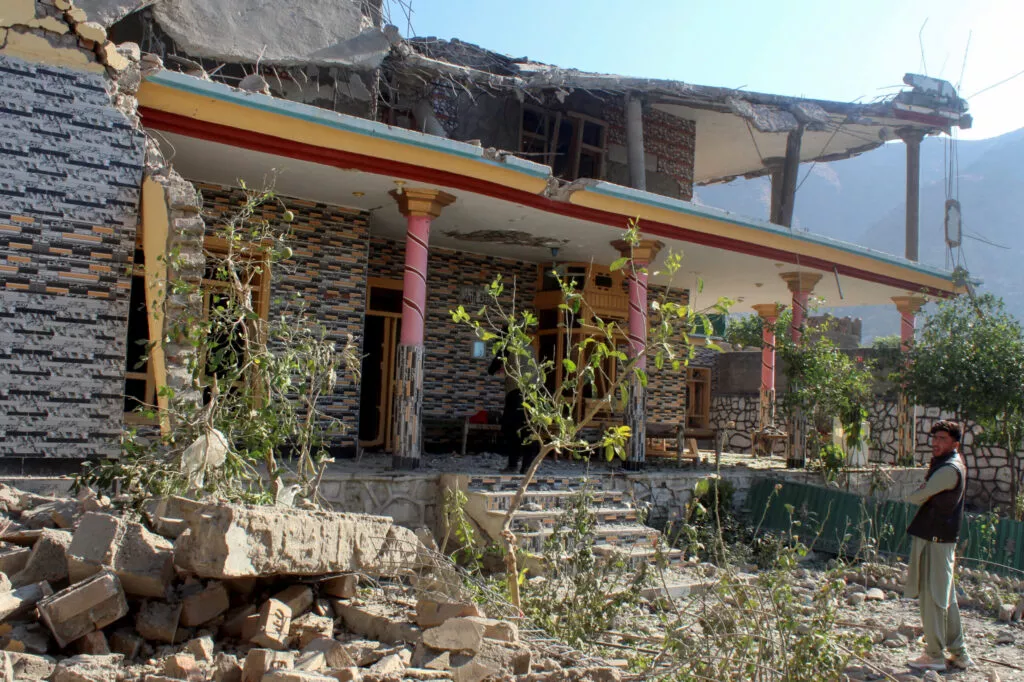
Afghan authorities condemned the violations of their territory and accused Pakistan of unilateral escalation. The exchange quickly caused the closure of crossings at Torkham and Chaman, disrupted trade and produced civilian casualties on both sides, prompting regional powers to call for restraint. With militaries now involved, this is the most dangerous bout of Afghanistan–Pakistan fighting in years.
Inside Pakistan, the risks are acute. The country can ill afford problems on two of its borders. A sustained insurgency that draws support from Khyber Pakhtunkhwa or restive areas of Balochistan would strain its army and security services, sap economic recovery and intensify internal political polarisation. Border closures choke trade and embolden domestic narratives that Pakistan’s civilian leaders are unable to protect national security — narratives that have historically strengthened the military’s political influence. If the TTP secures even limited acceptance in Pashtun areas, the state faces a classic insurgency dilemma. Heavy-handed counterinsurgency may alienate communities, while permissiveness risks giving militants freedom to reorganise.
India’s reopening of a full diplomatic mission in Kabul and its public commitments of medical support and development aid complicate Pakistan’s calculus. New Delhi seeks influence in Afghanistan regardless of regime type, while Pakistan fears an Afghanistan that leans towards India. A more engaged India, combined with a Kabul that is uncooperative on security questions, would place Pakistan between two uncomfortable realities — a rivalry with India to the east and a volatile western Afghan border. This ‘two-front’ problem amplifies the strategic cost of any prolonged confrontation.
External powers have called for restraint. China and Russia have both emphasised dialogue, offering themselves as mediators. Beijing wants to prevent instability that could spill into Xinjiang or disrupt projects linked to the China–Pakistan Economic Corridor. It also prefers a stable Islamabad and a Kabul that is not a vector for anti-Chinese militants. Moscow has encouraged de-escalation as it consolidates its diplomatic engagement with Kabul. Both capitals will prioritise calm while nudging negotiations towards protecting their regional interests.
Temporary ceasefires, mediated talks and measured diplomatic back channels will likely produce a managed cooling because major states prefer containment over escalation. But without a durable mechanism to dismantle militant sanctuaries and an Afghan policy that constrains groups like the TTP, the risk of low intensity clashes will remain high.
Pakistan’s domestic politics will shape the future trajectory. A punitive kinetic strategy without effective political outreach in Pashtun areas would likely entrench cycles of violence. A balanced approach — combining targeted security action, community engagement in border provinces and a mediated trilateral dialogue that places responsibility on Kabul to act against cross-border militants — offers a harder but more probable path to stabilisation.
Sajjad Ashraf was Adjunct Professor at the Lee Kuan Yew School of Public Policy, National University of Singapore from 2009 to 2017. He was a member of the Pakistan Foreign Service from 1973 to 2008.