


Wednesday March 11, 2026
Place your advertisement here.
Contact us today +2207336467/5035263
.
GCRPS Logo
Place your advertisement here.
Contact us today +2207336467/5035263
GRA Image
Place your advertisement here.
Contact us today +2207336467/5035263

Scientists have Discovered a Method to Differentiate Between Elephant Ivory and Legally Obtained Mammoth Ivory – Research Study

University of Hong Kong scientists developed a method to identify elephant versus mammoth ivory using isotopic signatures, helping law enforcement curb illegal ivory trafficking, which threatens the 400,000 remaining African elephants despite a 1989 trade ban.

Share the news with your Friends and Family
Elephant-Ivory-Identification

By Redaction ARPS Media with Frontiers and Others

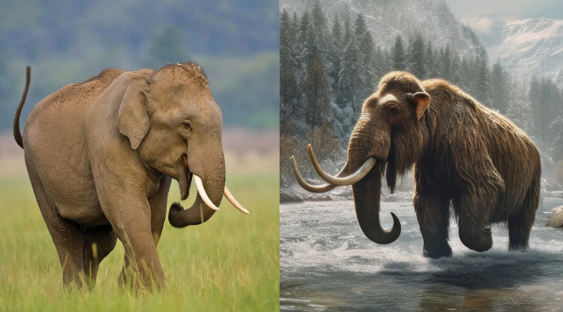
Scientists at the University of Hong Kong have developed a method to distinguish between elephant ivory and mammoth ivory, a crucial step in law enforcement efforts to combat illegal ivory trafficking.

Despite a ban on the elephant ivory trade since 1989, around 20,000 African elephants are still killed annually for their tusks. Traffickers often misrepresent elephant ivory as mammoth ivory, which is legally traded.

The new technique relies on analyzing the isotopic signatures of water consumed by elephants and mammoths, allowing for the identification of the tusks. The goal is to provide a quick and cost-effective tool for law enforcement to combat the smuggling of ivory.

Elephant populations have declined significantly, from approximately 12 million a century ago to around 400,000 today.

Reference: A mammoth task: Stable isotope analyses as a tool to prevent illegal trade of elephant ivory. Front Ecol Evol. 2025;13. doi: 10.3389/fevo.2025.1533703

Sign up to receive the latest news and events in your inbox

Join our community of news enthusiasts.

Breaking News in your inbox

Sign up to receive latest news and events in your inbox.

Share the news with your Friends and Family

Related News

Australia-climate-targets

Australia can’t reach its ambitious climate targets with current policies. Here are 6 things we can try

By Steve Hatfield-Dodds In less than ten years, Australia has to cut its emissions 62–75% below 2005 levels. Given reductions in emissions over the past 20 years, that translates to cutting emissions 47–65% below current levels. As of last year, that’s about 440 million tonnes (Mt) of carbon dioxide equivalent. Under current climate policies, official projections indicate annual emissions

Share the news with your Friends and Family

Radio Fresh: A Syrian history

By Jo Meg Kennedy Raed Fares and Hamoud Junaid, together with a young colleague, Ali Dandoush, had just left the offices of Radio Fresh, getting into the car together. The director was at the wheel and, shortly after, noticed a silver van behind them. He took a dirt road to get away, but everything had already

Share the news with your Friends and Family
ARPS Media
ARPS Media

FREE
VIEW