


%20no-repeat%20center%20center;-webkit-background-size:cover;-moz-background-size:cover;-o-background-size:cover;background-size:%20cover;)
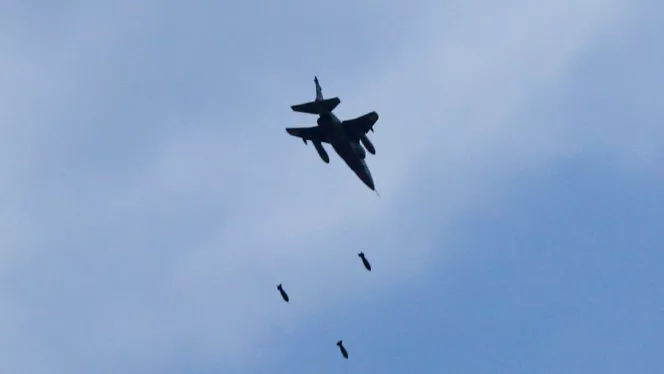
The U.S. Africa Command (AFRICOM) said on Sunday that it carried out an airstrike against Islamic State fighters in Somalia last week, in coordination with the country’s federal government.
In a statement, AFRICOM said the strike targeted ISIS-Somalia on Jan. 9 in the vicinity of the Golis Mountains, about 33 km (20 miles) southeast of the northern port city of Bosaso.
AFRICOM said the operation was “conducted alongside Somalia’s federal government and the Somali Armed Forces” as part of broader efforts to “degrade the group’s ability to threaten the United States, U.S. forces, and Americans abroad.” The command did not immediately provide details on casualties or damage resulting from the strike.
Since early 2025, U.S. AFRICOM has significantly increased the tempo of operations against Al-Shabaab and ISIS-Somalia. By mid-year, more than 50 airstrikes had been recorded, targeting militant strongholds in southern and central Somalia. By December, the total number of strikes had surpassed 111, exceeding the combined totals carried out under previous U.S. administrations. These operations have included precision drone strikes and missions by manned aircraft. While often coordinated with Somalia’s government forces, they are largely planned and directed by U.S. military commanders.
Even as the air campaign has intensified, Washington has halted and scaled back certain aid programs and has been cautious about committing resources to strengthen Somalia’s security institutions. U.S. officials have cited concerns over corruption, mismanagement, and the Somali government’s limited capacity to effectively absorb foreign assistance.
As a result, direct support for the Somalia’s National Army and police forces has remained uneven, contributing to gaps in Somalia’s ability to sustain ground operations against insurgent groups.
The growing reliance on airstrikes reflects a broader U.S. strategy aimed at minimizing troop deployments while maintaining active engagement. Air power allows Washington to target high-value militants while reducing risks to American personnel.
The lates strike near the Golis Mountains reflects an evolving U.S. approach in Somalia, one that relies heavily on air power to contain what Washington describes as “extremist threats,” while limiting American exposure on the ground. Although AFRICOM says the operation was intended to weaken ISIS-Somalia’s ability to threaten U.S. interests, its longer-term effectiveness will depend on whether military pressure from the air is matched by sustained investment in Somalia’s own security capacity. Since the beginning of 2025, Al-Shabaab has sustained attacks against Somalia’s security forces and has managed to seize key strategic towns, despite continued U.S. airstrikes.
Source: U.S. military says it struck ISIS fighters in Somalia | Geeska