%20no-repeat%20center%20center;-webkit-background-size:cover;-moz-background-size:cover;-o-background-size:cover;background-size:%20cover;)
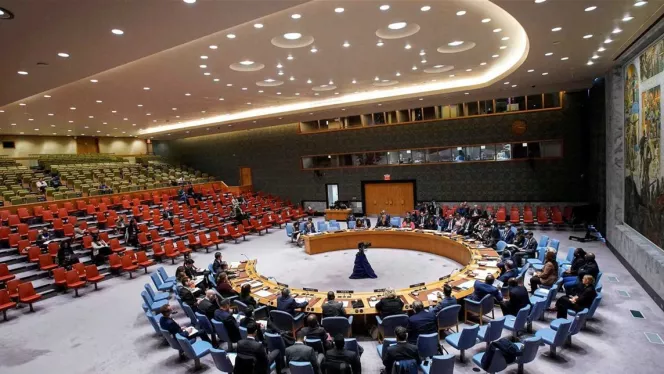
South Africa criticized the United States during a UN Security Council meeting following a U.S. military operation that resulted in the “capture” of Venezuelan President Nicolás Maduro and his wife, Cilia Flores, and their transfer to the United States. South Africa described the operation as a violation of the UN Charter and the principle of state sovereignty.
The Security Council held an emergency session on Monday, January 5, 2026, to discuss the legal and political implications of the operation carried out on January 3. The meeting exposed divisions among member states. Several countries, including South Africa, argued that the U.S. action undermined international law, while the United States defended it as a law-enforcement operation linked to existing criminal charges against Maduro.
Speaking on behalf of South Africa, Acting Deputy Permanent Representative Jonathan Basmoore said“no nation can claim legal or moral superiority over another” and emphasized that “sovereign equality” is a core principle of the UN Charter. He reiterated that member states are obligated to resolve disputes peacefully and to refrain from using force against the territorial integrity or political independence of other states.
South Africa said the unilateral U.S. military action and the arrest of Maduro and his wife on Venezuelan territory constituted a “violation of Venezuela’s sovereignty.” The statement warned that accepting such actions could weaken diplomatic norms and international legal constraints.
The South African delegation cited previous military interventions, including in Libya and Iraq, as examples it said led to instability. It argued that allegations related to human rights or criminal charges against a sitting head of state do not justify breaching Article 2(4) of the UN Charter, which prohibits the use of force.
South Africa also noted that international law grants states exclusive jurisdiction over individuals within their territory, adding that arrests carried out without a host state’s consent violate sovereignty. It said international mechanisms such as the International Court of Justice and the Security Council provide alternative avenues for addressing disputes.
https://www.facebook.com/plugins/video.php?height=311&href=https%3A%2F%2Fwww.facebook.com%2Freel%2F774218081791583%2F&show_text=false&width=560&t=0
On January 3, South Africa’s Department of International Relations and Cooperation issued a statement confirming that Washington had acknowledged conducting a large-scale military operation in Venezuela and transferring Maduro and his wife to the United States. The department called for an urgent Security Council meeting to address the developments.
Venezuela described the operation as an illegal armed attack and the abduction of a head of state. Venezuela’s UN ambassador, Samuel Moncada, said his country was being targeted because of its natural resources, according to reports from the meeting.
Separately, Reuters reported that Venezuela declared a state of emergency and ordered security forces to arrest individuals suspected of involvement in or support for the U.S. operation, citing a decree published on January 5.
U.S. Ambassador to the United Nations Mike Waltz defended the operation, calling it a targeted law-enforcement action to enforce criminal indictments against Maduro. He denied that the operation amounted to a war against Venezuela and compared it to the 1989 arrest of former Panamanian leader Manuel Noriega.
Reuters also quoted the Office of the UN High Commissioner for Human Rights as saying the U.S. intervention violated international law and increased global insecurity. The office warned that such actions could undermine international security norms and worsen human rights conditions in Venezuela.
Diplomats said the issue is likely to remain contentious within the Security Council, with concerns that further escalation could increase instability in Latin America and further strain international rules governing the use of force.
Source: Newswire @ South Africa criticize U.S. capture of Maduro at UN | Geeska