


%20no-repeat%20center%20center;-webkit-background-size:cover;-moz-background-size:cover;-o-background-size:cover;background-size:%20cover;)

JAKARTA — In the wake of the deadly floods and landslides that struck Indonesia in late 2025, the nation’s environment ministry has sued six companies, seeking 4.8 trillion rupiah ($284 million) in environmental damages linked to the disasters.
Following devastating floods and landslides triggered by Cyclone Senyar in November, which killed more than 1,100 people across Indonesia’s main western island of Sumatra, the ministry launched an investigation into 70 companies operating in the region to examine possible links between corporate activities and the disasters.
This week, the environment ministry’s law enforcement department announced the preliminary results of its investigation.
Six companies, it said, were responsible for alleged damage to watersheds in North Sumatra province, involving the clearing of 2,516 hectares (6,217 acres) of rainforest, particularly in and around the Batang Toru and Garoga watersheds.
“The reason these companies are being sued is that, based on expert studies, alleged environmental damage was found around the Garoga watershed and the Batang Toru watershed,” said Dodi Kurniawan, the director of environmental dispute resolution at the ministry, during a press conference in Jakarta on Jan. 15.
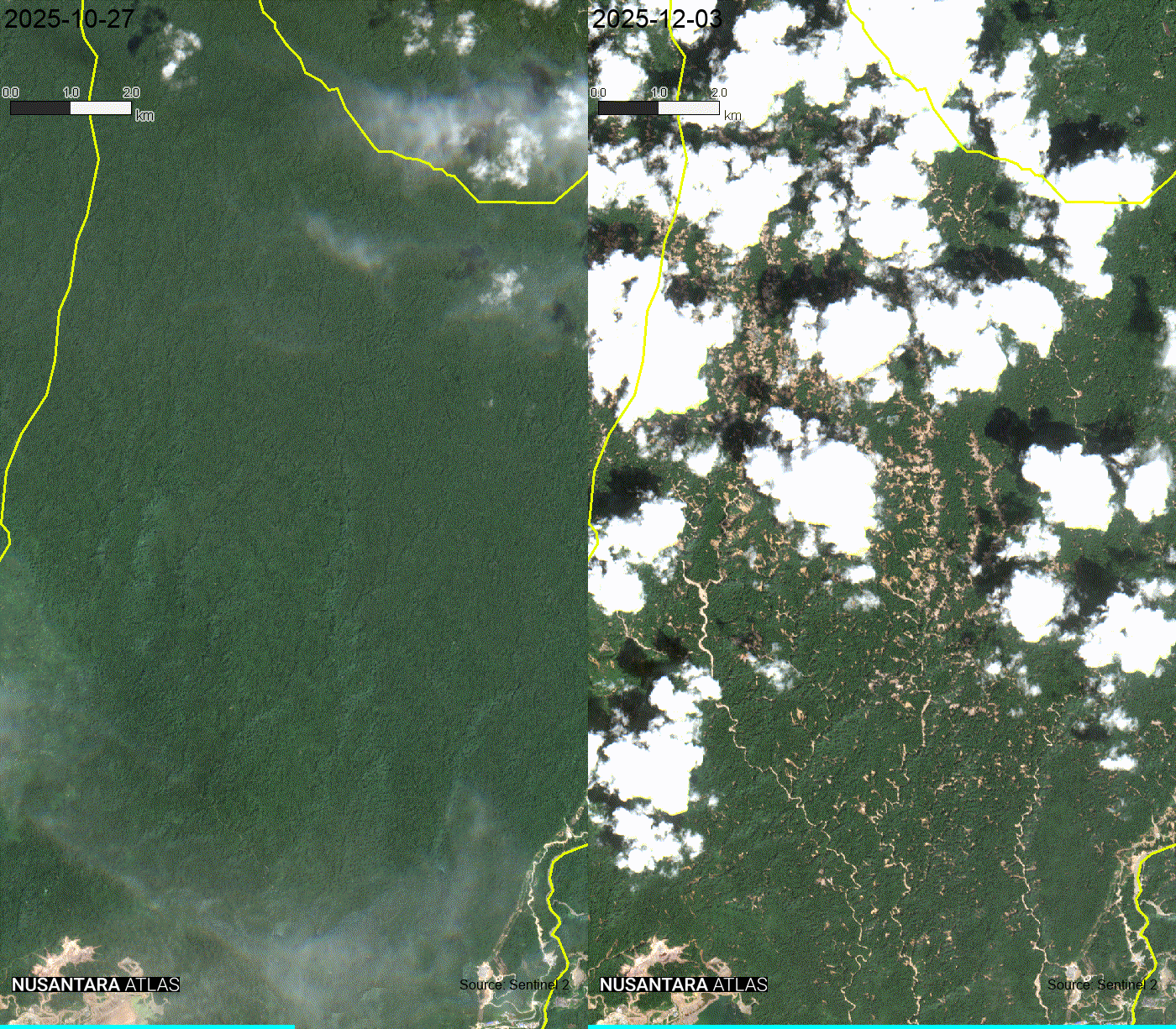
The steep rainforest hills of Batang Toru are part of an ecologically fragile ecosystem home to critically endangered species, including the Tapanuli orangutan (Pongo tapanuliensis), the world’s rarest great ape.
Given the Batang Toru ecosystem’s immense ecological value, environmental groups and scientists have long urged the government to strengthen protections for the region. Yet corporate activities have continued to be permitted there, allowing mining, hydropower and plantation projects to establish concessions within the landscape.

The six companies, identified only by their initials by the ministry, are PT NSHE, PT AR, PT TPL, PT PN, PT MST and PT TBS. They operate across sectors including gold mining, hydropower, palm oil and industrial timber plantations, the ministry said.
The companies are widely understood to include pulpwood producer PT Toba Pulp Lestari, an arm of the APRIL conglomerate involved in land disputes with local communities; China-backed PT North Sumatra Hydro Energy, which is building a hydropower dam in the habitat of the Tapanuli orangutan; and U.K.-owned PT Agincourt Resources, which operates the Martabe gold mine within the orangutan’s range.
All three companies were previously among eight firms operating in the region whose activities were investigated and temporarily suspended by the environment ministry in the wake of the disaster.
The ministry’s findings echo concerns raised in earlier investigations by civil society groups into the three companies.
For PT Toba Pulp Lestari, research by nonprofits Earthsight and Auriga Nusantara found that between 2021 and late 2025, at least 758 hectares (1,873 acres) of intact upland forest were cleared within the company’s Aek Raja concession in North Sumatra — including land zoned as protected and identified as prone to landslides — with an additional 125 hectares (309 acres) cleared beyond the concession boundary.
Satellite imagery and field surveys indicate that some of this clearance occurred on steep slopes immediately upstream of areas hit by landslides, and that recently cleared areas were later planted with eucalyptus monocultures, suggesting industrial-scale activity rather than isolated illegal logging. PT TPL has denied the allegations and said it did not log natural forest, instead attributing any rainforest clearance to third parties.
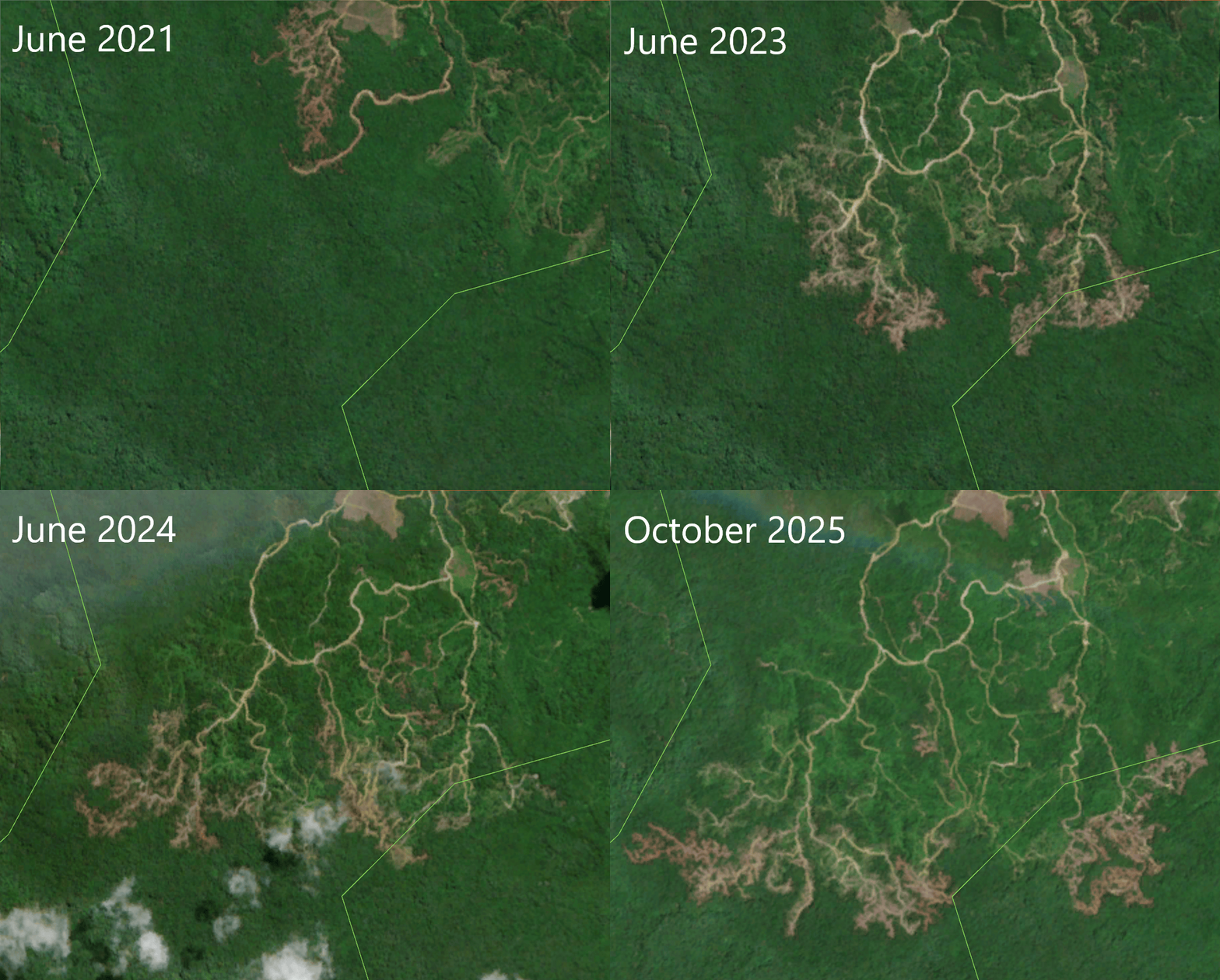
Indonesian NGO Satya Bumi’s monitoring of the Batang Toru ecosystem notes that hydropower development by PT North Sumatra Hydro Energy cleared hundreds of hectares of rainforest along steep river corridors, potentially destabilizing slopes and hydrological functions before the disaster, and that logs from the upper watershed were seen in floodwaters.

For PT Agincourt Resources, investigation by Satya Bumi highlights extensive clearing within and around the Martabe gold mine concession, including hundreds of hectares of deforestation in key watersheds.
These activities, critics argue, have altered drainage patterns, increased runoff and erosion, and reduced natural landscape buffers that help regulate extreme rainfall, contributing to the disaster.

Mongabay contacted all three companies for comment on the lawsuits, but only PT Agincourt Resources responded by press time.
PT Agincourt Resources corporate communications senior manager Katarina Siburian Hardono said the company could not provide further comment as it had not yet received official notification or a copy of the lawsuit.
“The Company will respect the ongoing legal process and follow it in accordance with the applicable legal mechanisms,” she told Mongabay.
She added that production activities at the Martabe gold mine have remained suspended since Dec. 6, 2025, in accordance with instructions from the environment ministry.
The six civil lawsuits have been filed in three district courts, in Medan, South Jakarta and Central Jakarta, said Rizal Irawan, head of the ministry’s law enforcement department.
The total value of the lawsuits amounts to 4.8 trillion rupiah, consisting of 4.6 trillion rupiah ($272 million) in claimed environmental damage and 178.5 billion rupiah ($10.5 million) for environmental restoration costs.
“This represents the companies’ responsibility for ecosystem damage that has directly affected public safety, livelihoods and the environment,” Rizal said at the press conference.
The investigation remains ongoing, and additional companies may face civil lawsuits, while potential criminal cases will be handled separately by a government task force responsible for forest area enforcement, he added.
“With these lawsuits, it is expected that environmental and ecosystem recovery can be carried out and that communities’ rights to a healthy environment can be restored,” Rizal said.
Banner image: Flood survivors use logs to cross a river in Batang Toru, North Sumatra, Indonesia, on Dec. 2, 2025. Image by AP Photo/Binsar Bakkara.
FEEDBACK: Use this form to send a message to the author of this post. If you want to post a public comment, you can do that at the bottom of the page.
Source: Indonesia sues 6 companies over alleged links to deadly floods & landslides