


%20no-repeat%20center%20center;-webkit-background-size:cover;-moz-background-size:cover;-o-background-size:cover;background-size:%20cover;)
By Dedrick Asante-Muhammad – This op-ed was distributed by OtherWords.org.
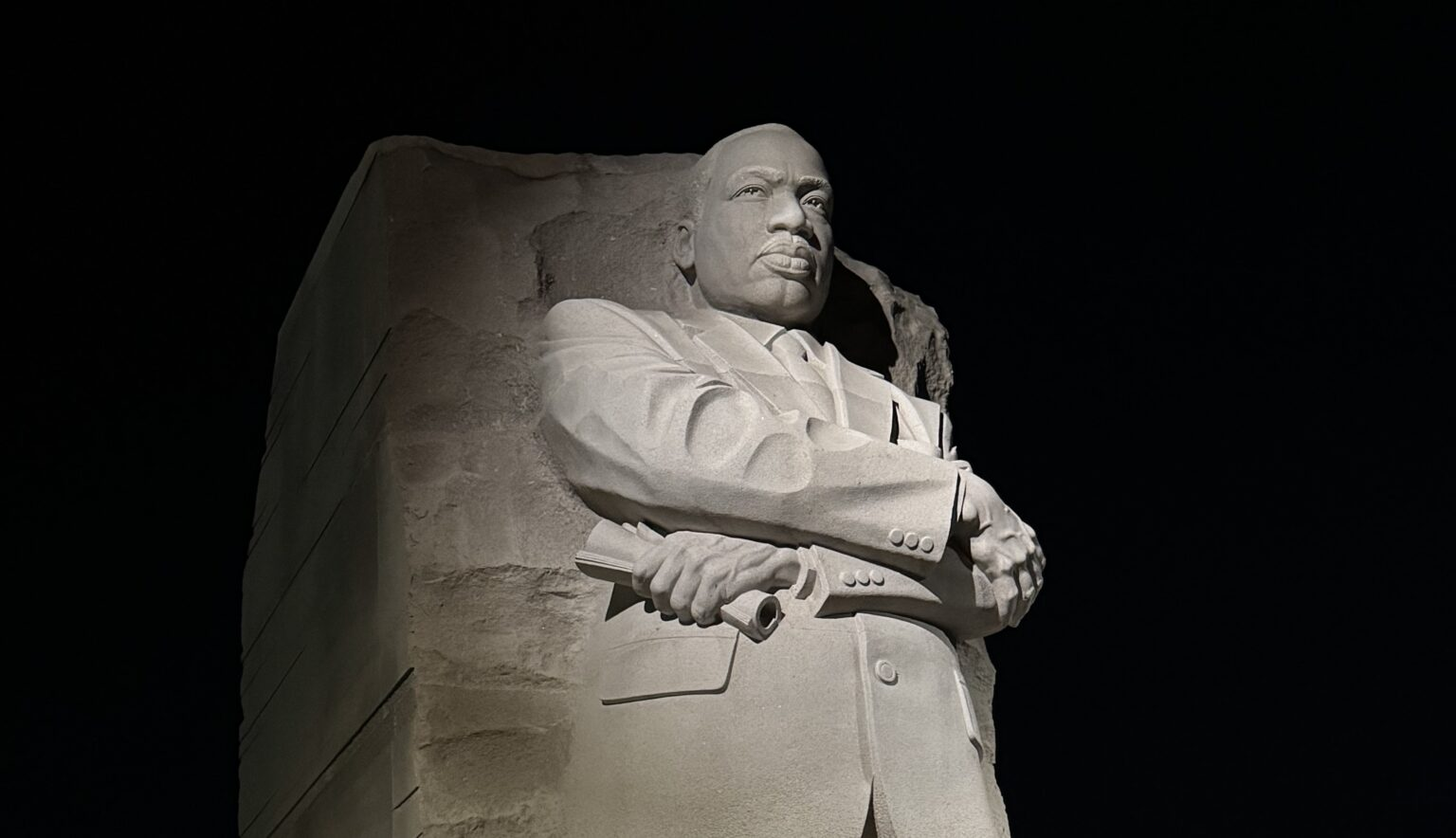
Dr. Martin Luther King, Jr.’s words from his “Beyond Vietnam” speech still ring true.
“When machines and computers, profit motives, and property rights are considered more important than people,” he warned, “the giant triplets of racism, extreme materialism, and militarism are incapable of being conquered.”
Those words, delivered in 1967, still summarize today’s political moment. Instead of putting the lives of working Americans first, our leaders in Congress and the White House have prioritized advancing corporate profits and wealth concentration, slashing government programs meant to advance upward mobility, and deploying military forces across the country, increasing distrust and tension.
This historic regression corresponds with a recessionary environment for Black America in particular. That’s what my organization, the Joint Center, found in our report, “State of the Dream 2026: From Regression to Signs of a Black Recession.”
The economic landscape for Black Americans in 2026 is troubling, with unemployment rates signaling a potential recession. By December 2025, Black unemployment had reached 7.5 percent — a stark contrast to the national rate of 4.4 percent. This disparity highlights the persistent economic inequalities faced by Black communities, which have only been exacerbated by policy shifts that have weakened the labor market. The volatility in Black youth unemployment, which fluctuated dramatically in the latter months of 2025, underscores the precariousness of the situation.
The Trump administration’s executive orders have systematically dismantled structures aimed at promoting racial equality. By targeting programs such as Lyndon Johnson’s 1965 Equal Employment Opportunity executive order and defunding agencies like the Minority Business Development Agency, the administration has shifted federal support away from disadvantaged businesses.
As a result, Black-owned firms risk losing contracts and resources tied to federal programs, potentially resulting in job losses and reduced economic growth. These changes threaten billions in federal revenue for Black-owned firms and undermine efforts to move beyond racial inequality in the workforce.
The GOP’s so-called “Big Beautiful Bill,” passed in 2025, further entrenches inequality by providing tax cuts that disproportionately benefit high-income households and corporations — while simultaneously slashing investments in programs like Medicaid and SNAP, limiting access to essential services for low-income households.
The technology sector, a critical component of the American economy, is also affected by this disregard for civil rights. Executive orders like “Removing Barriers to American Leadership in Artificial Intelligence” have stripped away protections that could advance inclusion in this rapidly growing field. As a result, the future of the American economy risks reinforcing past inequalities.
Dr. King’s call for strong, aggressive federal leadership in addressing racial inequality remains highly relevant. However, instead of eradicating structures of inequality, our current leadership is implementing policies that destroy government jobs and dismantle agencies responsible for preventing predatory economic practices. These choices undermine longstanding efforts to combat racial and economic disparities — and exemplify the regressive economic policies that coincide with rising Black unemployment.
As Dr. King stated, “we refuse to believe that the bank of justice is bankrupt.” But urgent action is required. Unless we act deliberately, economic and racial inequalities will become entrenched, resulting in generational loss. The core question is whether we will move beyond our nation’s history of racism, materialism, and militarism, and — as Dr. King urged — embrace “the fierce urgency now” to advance equity.
Source: Dr. King’s warnings seem more prescient than ever • Utah News Dispatch