
%20no-repeat%20center%20center;-webkit-background-size:cover;-moz-background-size:cover;-o-background-size:cover;background-size:%20cover;)
By Metolo Foyet
As the world grapples with climate change, biodiversity loss and resource scarcity, Indigenous and local communities (IPLCs) remain at the forefront of conservation, yet are often sidelined in global environmental governance. Dominant frameworks, such as the Convention on Biological Diversity (CBD) and the United Nations Framework Convention on Climate Change (UNFCCC), have made strides in acknowledging Indigenous rights, but IPLCs still face significant barriers to meaningful participation. These barriers include one-size-fits-all legal frameworks, insufficient representation, inadequate capacity within IPLC groups, misaligned priorities between donors and IPLCs, persistent language obstacles, trust issues, and the continued influence of powerful global actors whose priorities often overshadow the needs and knowledge systems of IPLCs.
However, as the geopolitical landscape shifts, new opportunities are emerging for IPLCs to assert their influence. One such alternative is the BRICS+ alliance, a coalition that has increasingly positioned itself as a counterbalance to Western-dominated global governance structures. The 10 BRICS+ nations (Brazil, China, Egypt, Ethiopia, India, Indonesia, Iran, Russia, South Africa and the United Arab Emirates) account for half the world’s population and two-fifths of trade, and include major energy producers and importers. Twelve more nations have applied, and the bloc is starting to build institutions with important implications for energy trade, international finance, supply chains and technological research. For IPLCs, BRICS+ presents a promising advocacy and trade platform for several reasons.
The BRICS framework’s emphasis on multipolar governance aligns well with IPLC desire for more decentralized, locally driven approaches to natural resource management. It offers them an opportunity to influence environmental policy without the constraints of Western-dominated power dynamics. This decentralization can help ensure that their voices are not merely tokenized but genuinely integrated into decision-making processes.
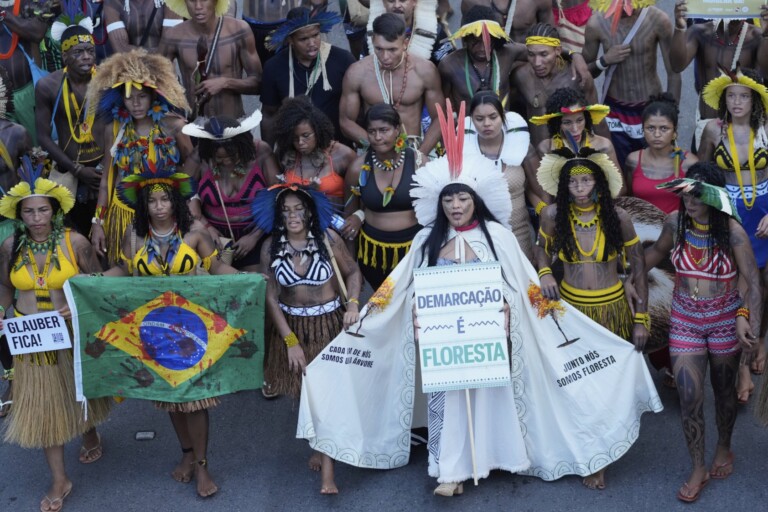
Unlike many Western-centric governance models, BRICS members have diverse cultural and ecological landscapes that naturally align with IPLC perspectives on sustainable resource management. This alignment can provide a more receptive space for Indigenous knowledge systems to shape global environmental policies.
BRICS nations also collectively control significant portions of the world’s biodiversity and natural resources, making them critical players in global conservation. For example, Brazil alone hosts nearly 60% of the Amazon Rainforest, which spans 6.7 million square kilometers (2.6 million square miles) and accounts for roughly 10% of the planet’s known biodiversity. Russia’s boreal forests, the largest in the world, cover more than 8 million km2 (3.1 million mi2), storing approximately 300 billion metric tons of carbon and capturing an average of 1.7 billion metric tons each year since 1988. India’s 18% forest cover supports a wide range of endangered species, including 70% of the world’s wild tigers.
Collectively, the BRICS+ countries account for roughly half of the global population and more than 40% of global GDP, positioning them as significant stewards of the Earth’s natural wealth.
In just a decade, economic ties between China and Brazil have deepened dramatically. In 2013, China became the largest investor in Brazil, investing nearly $18.7 billion in projects ranging from infrastructure to energy. By 2023, this economic partnership had grown nearly tenfold, with bilateral trade reaching $181.53 billion. By 2024, intra-BRICS trade surpassed $600 billion, driven by shared efforts to reduce reliance on Western financial institutions. This economic cooperation is part of a broader strategy to reform the international financial and monetary system, reflecting their collective position against trade protectionism and their shared desire for a more multipolar global order.
Climate change presents another common challenge. BRICS countries are major carbon emitters, collectively responsible for around 42% of global CO2 emissions, with China alone accounting for nearly 30% as the world’s largest emitter. However, these nations have also become significant investors in renewable energy, with China leading global investments in solar and wind technologies, spending $546 billion in 2022 alone. This shift is part of their push to secure low-cost, climate-friendly technologies from developed countries, reflecting a shared commitment to balancing economic growth with environmental sustainability. They are also engaged in negotiations with developed countries on the transfer of environmentally friendly technologies to developing nations at low cost.
For example, under the BRICS Clean Energy and Energy Efficiency Cooperation framework, China has committed to sharing its advanced solar and wind technologies with other BRICS members and the Global South. In 2022, China exported nearly 70% of the world’s solar panels, with a significant portion destined for emerging economies. Additionally, the BRICS New Development Bank (NDB) has financed more than $30 billion in green energy projects, including Brazil’s massive Belo Monte hydropower plant and India’s ambitious solar power initiatives, aimed at generating 500 gigawatts of renewable energy by 2030. This cooperation reflects a broader effort to close the technological gap between the Global North and South, promoting sustainable growth while reducing dependency on Western technology.
This growing emphasis on technological self-reliance and the bioeconomy creates significant opportunities for marginalized groups. Consequently, by aligning with BRICS, IPLCs can gain access to alternative funding mechanisms, technology transfers, and capacity-building programs that reduce dependency on traditional aid structures.

New alliances for alternative economies
Through alliances like BRICS, IPLCs can build strategic partnerships with like-minded actors who share their interests in preserving biodiversity and maintaining cultural integrity, creating a more balanced and contextually relevant approach to global environmental governance. For example, the BRICS Intellectual Property (IP) Cooperation offers the potential to create new trade networks for Indigenous products, cultural goods and ecosystem services, aligning economic growth with conservation goals and reinforcing local economies.
Moreover, the Global South’s IPLCs can leverage the BRICS to advance the sustainable wildlife economy. As global environmental governance mechanisms in the U.K., U.S. and Europe increasingly target trophy hunting bans and impose strict wildlife trade regulations, the livelihoods of IPLCs in Southern Africa face significant challenges. For example, the U.K.’s proposed trophy hunting import ban, if enacted, could severely impact rural economies in Namibia, Botswana, Zimbabwe and South Africa, where community-based natural resource management (CBNRM) programs generate substantial income from wildlife tourism and trophy hunting. In Namibia alone, community conservancies generated more than $10 million in annual revenue from trophy hunting before the COVID-19 pandemic, supporting jobs, antipoaching initiatives and infrastructure projects. However, these bans risk undermining decades of conservation gains by disconnecting wildlife conservation from economic incentives, ultimately threatening both biodiversity and rural livelihoods.
In this context, BRICS offers a promising alternative for IPLCs to diversify their wildlife economies and reduce reliance on Western markets. With their collective control over significant portions of the world’s biodiversity and growing influence in global trade, BRICS countries present an opportunity for IPLCs to engage in more equitable, culturally sensitive economic partnerships.
For instance, China, the world’s second-largest economy, has a rapidly expanding middle class with a growing interest in ecotourism, wildlife experiences and conservation-friendly products. In 2022, Chinese outbound tourism spending exceeded $255 billion, and projections suggest this figure could surpass $365 billion by 2028. By tapping into Asian emerging markets, IPLCs and allies can develop alternative revenue streams that are less vulnerable to the shifting priorities of Western animal rights NGOs.
Additionally, the BRICS NDB and the proposed BRICS Common Reserve Currency present new financial instruments for funding conservation projects. These mechanisms can support initiatives like wildlife corridors, antipoaching technologies and sustainable tourism infrastructure, directly benefiting IPLCs. For example, the NDB has already invested in renewable energy and green infrastructure projects in member states, disbursing more than $30 billion in loans since its inception. Expanding this focus to include biodiversity and wildlife economies could provide much-needed capital for IPLC-led conservation efforts, reducing dependency on traditional Western funding sources and fostering self-reliance.
Furthermore, by participating in BRICS forums and institutions, IPLCs can advocate for policies that respect their traditional ecological knowledge (TEK) systems and support community-led conservation. This approach not only diversifies economic opportunities but also strengthens political leverage in global conservation debates, ensuring that, for example, Southern African IPLCs are not merely passive recipients of Western conservation models but active architects of their environmental futures.

Challenges and gaps in the BRICS frameworks
Despite their significant influence on global governance, the BRICS countries have yet to establish a comprehensive, legally binding agreement specifically addressing the rights of Indigenous peoples. While most BRICS states are parties to basic human rights agreements, such as the International Covenant on Civil and Political Rights (ICCPR) and the International Covenant on Economic, Social and Cultural Rights (ICESCR), they lack a unified framework specifically addressing the rights of Indigenous peoples, despite their collective hosting of numerous IPLCs.
For instance, Brazil is home to more than 300 Indigenous groups, representing approximately 900,000 people, while India has more than 700 tribal groups, making up nearly 8.6% of its population (roughly 104 million people). Yet, these populations remain marginalized in many aspects of governance, facing significant challenges in asserting their rights over traditional lands and resources. This gap stands in contrast to Western blocs, which have enacted more explicit protections for Indigenous rights through mechanisms like the United Nations Declaration on the Rights of Indigenous Peoples (UNDRIP) and regional charters.
One of the primary challenges of the BRICS lies in the diverse ethnocultural “palette” of its nations, which complicates public administration in this area of legal relations. The significant variation in cultural, linguistic and historical contexts across countries like India, China, Brazil, Russia and South Africa makes it challenging to create standardized policies that respect Indigenous self-determination without risking internal tensions. This diversity also makes it challenging to establish consistent policies that address Indigenous rights without infringing on national sovereignty.
For example, both India and China are state parties to the International Labour Organization’s (ILO) Convention 107, a framework adopted in 1957 that emphasizes “paternalism” and “integration” over the right to self-determination. This convention, which remains in force for only 17 countries globally, reflects an outdated approach that conflicts with the contemporary understanding of Indigenous rights. In contrast, ILO Convention 169, which explicitly recognizes the right to self-determination and respect for Indigenous cultures, has been ratified by 24 countries, mainly in Latin America and Europe, but not by any BRICS member, highlighting a significant gap in their commitment to Indigenous rights.

Moreover, the main challenges associated with ethnopolitics in the BRICS countries involve establishing robust legal frameworks and litigation support systems to protect the rights of Indigenous communities. In Russia, where approximately 250,000 Indigenous people live across 41 regions, legal protections for their land rights remain weak, often clashing with industrial interests, such as oil and gas extraction in Siberia and the Arctic.
Similarly, in South Africa, the San and Khoi peoples, who number roughly 100,000, continue to struggle for land restitution and recognition of their cultural heritage. These challenges also include securing the right to self-identification, preserving native languages, and maintaining traditional uses of natural resources. Without addressing these fundamental issues, BRICS nations risk falling short of their potential as a transformative alternative to Western blocs, instead replicating patterns of Indigenous marginalization and exclusion, thereby undermining their broader goals of inclusive development and cultural preservation.
While it is true that Western blocs have established more explicit legal frameworks to recognize Indigenous rights, this does not necessarily equate to more effective or sincere inclusion of IPLCs in practice. Many Western countries still face significant criticism for the implementation gaps between policy and the lived realities of Indigenous communities.
In contrast, BRICS+ countries, despite currently lacking a unified legal framework, offer unique opportunities for reimagining Indigenous inclusion through their emphasis on multipolarity, South-South cooperation, and alternative development paradigms that could, if strategically leveraged, provide space for Indigenous voices to shape governance from within.
This analysis highlights that untapped potential and argues that BRICS+ — if it chooses to center Indigenous perspectives in its evolving institutional frameworks — could pioneer a model of inclusion that is not merely symbolic but transformative, rooted in diverse epistemologies and non-Western conceptions of rights and sovereignty.
For IPLCs to effectively engage with BRICS, several steps are essential:
- Building robust local and regional networks that can effectively lobby for IPLC interests within BRICS;
- Developing frameworks for knowledge exchange that integrate traditional ecological knowledge with modern scientific approaches;
- Creating financial instruments and trade agreements that prioritize local control over natural resources and equitable benefit-sharing;
- Engaging in high-level diplomatic efforts to ensure that IPLC voices are included in future BRICS environmental strategies.
As global power dynamics continue to evolve, IPLCs have a unique opportunity to redefine their role in environmental governance, moving from passive observers to active architects of a more inclusive, sustainable future. BRICS, with its emphasis on economic justice and multipolar governance, provides a viable pathway for achieving this vision.
However, this will require a concerted effort to address the significant legal and political gaps within the BRICS framework to ensure that IPLC rights are not merely symbolic but genuinely integrated into the alliance’s environmental agenda.
Metolo Foyet received her Ph.D. in geography (tropical conservation and development) from the University of Florida in the U.S., and is a consultant for The Nature Conservancy, leading human rights due diligence for the organization’s global operations.
Related audio from Mongabay’s podcast: A discussion with the director of the Tenure Facility which has helped Indigenous and local communities gain (or regain) rights to tens of millions of hectares of their traditional territories worldwide, listen here:
https://play.libsyn.com/embed/episode/id/39162600/height/128/theme/modern/size/standard/thumbnail/yes/custom-color/ffffff/time-start/00:00:00/hide-show/yes/hide-playlist/yes/hide-subscribe/yes/hide-share/yes/font-color/020402
See related coverage:https://news.mongabay.com/2025/12/congos-communities-are-creating-a-1-million-hectare-biodiversity-corridor/embed/#?secret=KWj75j7Ohf#?secret=eAPUbO2WPR https://news.mongabay.com/2025/12/respecting-uncontacted-peoples-can-protect-biodiversity-and-our-humanity-commentary/embed/#?secret=yPH5P80xhx#?secret=QMh5HNfzYL
Citations :
Rai, S., Lama, S., & Dhyani, S. (2024). Mainstreaming Indigenous and Traditional Ecological Knowledge (TEK) systems in global climate policy for resilient ecosystems and societies. In S. C. Rai & P. K. Mishra (Eds.), Sacred Landscapes, Indigenous Knowledge, and Ethno-culture in Natural Resource Management (p. 485–507). doi:10.1007/978-981-97-4206-6_25
Matose, F., Fonjong, L., & Sonnenfeld, D. A. (2025). Protecting and benefitting from nature: Insights and policy dilemmas from Africa. Society & Natural Resources, 38(4), 299-309. doi:10.1080/08941920.2025.2466171
Ekardt, F., Günther, P., Hagemann, K., Garske, B., Heyl, K., & Weyland, R. (2023). Legally binding and ambitious biodiversity protection under the CBD, the global biodiversity framework, and human rights law. Environmental Sciences Europe, 35(1). doi:10.1186/s12302-023-00786-5
Wang, S., Yang, S., & Li, M. (2024). Institutional innovation for biodiversity finance with direct financing from international foundations to IPLCs (Master’s thesis, Duke University). Retrieved from https://dukespace.lib.duke.edu/server/api/core/bitstreams/201de720-879d-48e4-8f03-1955dee43219/content
Reiter, B. (2018). Constructing the Pluriverse: The geopolitics of knowledge. Duke University Press.
Salvarani, F. M., da Silva Oliveira, H. G., Silva Correa, L. Y., Lima Soares, A. A., & Ferreira, B. C. (2025). The importance of studying infectious and parasitic diseases of wild animals in the Amazon biome with a focus on One Health. Veterinary Sciences, 12(2), 100. doi:10.3390/vetsci12020100
Udeagha, M. C., & Ngepah, N. (2023). The drivers of environmental sustainability in BRICS economies: Do green finance and fintech matter? World Development Sustainability, 3, 100096. doi:10.1016/j.wds.2023.100096
Basso, L., & Viola, E. (2022). Are the BRICS engaged in the low carbon transition? CEBRI Journal , 1(4). Retrieved from https://cebri-revista.emnuvens.com.br/revista/article/view/82/154
Gladun, E., & Zadorin, M. (2023). The system of Indigenous Peoples’ protection in BRICS states: An overview of legal and litigation support. BRICS Law Journal, 10(4), 121-141. doi:10.21684/2412-2343-2023-10-4-121-141
Kennedy, C. M., Fariss, B., Oakleaf, J. R., Garnett, S. T., Fernández-Llamazares, Á., Fa, J. E., … Kiesecker, J. (2023). Indigenous Peoples’ lands are threatened by industrial development; conversion risk assessment reveals need to support Indigenous stewardship. One Earth, 6(8), 1032-1049. doi:10.1016/j.oneear.2023.07.006